

Why Large Scale Developments Need Better Documentation Key Takeaways
Construction documentation is the complete record of every drawing, specification, contract, permit, and correspondence that defines a project.
- Why Large Scale Developments Need Better Documentation — poor records cause up to 30% of project rework; structured systems eliminate guesswork and speed approvals.
- Adopting digital construction tools like BIM documentation and CAD drawings transforms how teams coordinate, reducing RFIs and submittal errors by over 40%.
- Offshore documentation support and business process outsourcing provide cost-effective scalability, especially for engineering change management and as-built drawings.
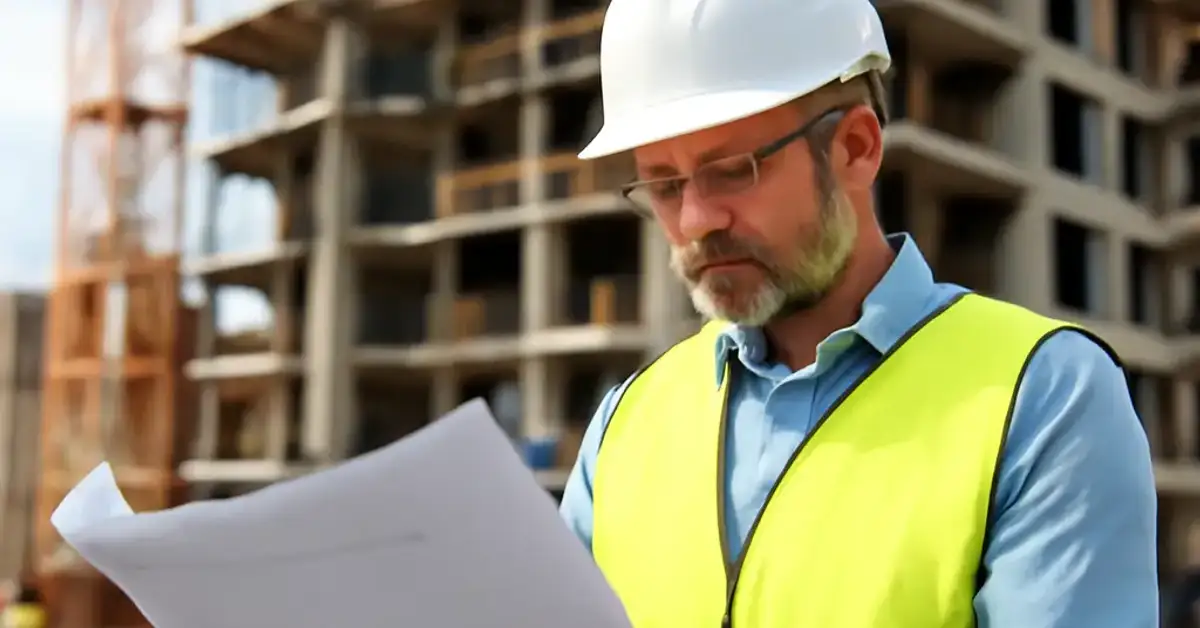
What Is Construction Documentation — and Why Does It Matter for Large-Scale Developments?
Construction documentation is the complete record of every drawing, specification, contract, permit, and correspondence that defines a project. For a multi-billion-dollar infrastructure project or a sprawling residential complex, it is the single source of truth for every decision made. Without it, no one knows which version of a slab detail is current, whether an RFI was answered, or if the latest CAD drawings reflect the approved BIM modeling.
Large-scale developments involve dozens of subcontractors, hundreds of suppliers, and regulatory bodies across multiple jurisdictions. Each stakeholder relies on project documentation to know exactly what to build, when, and to what standard. When documentation is fragmented or outdated, the entire construction project management process breaks down. That is precisely why large scale developments need better documentation — because the margin for error is razor-thin and the cost of mistakes runs into millions.
Why Is Documentation Important for Large-Scale Developments?
Consider a major airport expansion. The design team produces thousands of CAD documentation sheets. The contractor issues hundreds of submittals. The owner requires strict compliance documentation to meet ISO standards. Every one of these documents must be tracked, reviewed, and archived. If a single revision management error slips through, the wrong foundation detail could be poured on site — triggering demolition, delay, and litigation.
Large-scale developments operate on tight schedules and fixed budgets. Delays caused by missing or conflicting documents quickly escalate. Document management is not a back-office afterthought; it is a core driver of construction efficiency and operational efficiency. When teams have instant access to accurate project records, they make faster decisions, minimize rework, and maintain momentum. That is why the industry is shifting toward digital construction platforms and engineering documentation systems that automate version control and provide real-time transparency.
How Does Proper Document Management Reduce Construction Delays?
Delays in large-scale projects almost always trace back to information gaps. A structural engineer waits three days for an approved RFI. A steel fabricator cannot release materials because they are working from an obsolete CAD drawing. A site supervisor stops a pour because the as-built drawings do not match the field conditions. These bottlenecks compound quickly.
Real-Time Access and Automated Workflows
Modern document management systems give every stakeholder live access to the latest documents. Automated approvals route engineering change management requests directly to the right reviewer. Digital workflows replace email chains and paper trails. When a revision is issued, the system automatically notifies everyone who needs it — and locks out older versions to prevent errors. The result is a dramatic reduction in waiting time and a smoother project coordination process.
Fewer RFIs and Clarification Cycles
Properly structured technical documentation — especially well-organized BIM documentation — answers questions before they are asked. Clash detection in the BIM model catches conflicts between mechanical, electrical, and structural systems early. That means fewer RFIs on site and fewer stoppages. For large-scale developments, every day saved is a significant cost saving.
What Types of Documents Are Essential for Major Infrastructure Projects?
Every large-scale development relies on a specific set of document categories. Missing any one can stall construction or trigger compliance failures.
- CAD drawings and BIM modeling files — the digital backbone of design and coordination.
- Submittals — shop drawings, product data, and samples that prove materials meet specifications.
- RFIs — formal requests for clarification or additional information from the design team.
- As-built drawings — the final record of what was actually constructed, critical for future maintenance and renovations.
- Procurement documentation — purchase orders, delivery receipts, and material test certificates.
- Compliance documentation — permits, inspection reports, and ISO standards certifications.
- Engineering change management records — tracking every design change and its approval.
- Project records — meeting minutes, daily logs, and correspondence logs.
Organizing these documents is the job of professional document control teams. For very large programs, many firms now outsource this work to specialized offshore documentation support providers who manage the entire lifecycle — from receipt through review, distribution, and archiving.
How Do BIM and CAD Documentation Improve Project Coordination?
BIM documentation and CAD documentation are not just design outputs — they are coordination tools. On a typical infrastructure project, multiple engineering disciplines produce overlapping designs. Without a common digital platform, clashes go unnoticed until they appear on site.
Building Information Modeling (BIM) integrates geometry, spatial relationships, and data about every component. When a structural beam conflicts with an HVAC duct, the BIM model flags it automatically. That clash can be resolved in the model before a single sheet of CAD drawings is issued for construction. This process, called clash detection, is one of the most powerful ways why large scale developments need better documentation — because it prevents errors that would otherwise cost millions to fix.
BIM modeling also supports project scheduling (4D BIM) and construction estimating (5D BIM), linking the document set directly to the timeline and budget. When a design changes, the schedule and cost impacts are visible immediately. That level of integration is impossible with paper-based or disconnected engineering documentation systems.
How Can Document Control Reduce Costly Construction Errors?
Document control is the discipline of managing the creation, review, distribution, and storage of all project documents. When done well, it eliminates the most common source of construction errors: working from the wrong information.
Consider a subcontractor who installs a precast panel based on Revision 2 of a shop drawing, but the approved version is Revision 4. That mistake can mean demolishing and replacing the panel — a cost that can exceed $50,000 per incident on a large-scale development. Proper revision management and version control ensure that only the current approved document reaches the field. Many firms now use cloud-based platforms that automatically sync the latest CAD documentation to mobile devices on site, so everyone literally sees the same thing.
Additionally, robust quality assurance processes built into the document management system cross-check submittals against specifications, ensuring that nothing is approved that deviates from the contract documents. This proactive approach reduces engineering change management cycles and keeps the project on track.
What Role Do Offshore Documentation Teams Play in Construction Projects?
Large-scale developments produce a volume of documents that can overwhelm in-house teams. Offshore documentation support has emerged as a strategic solution for managing this workload cost-effectively. Specialized firms provide skilled document control professionals, CAD documentation technicians, and BIM modeling specialists who work remotely, often in different time zones, to keep the document pipeline flowing 24 hours a day.
Outsourcing project documentation tasks — such as converting markups into clean CAD drawings, updating as-built drawings, or processing submittals — frees the core team to focus on high-value engineering and management decisions. It also provides scalability. When a project ramps up, the offshore team can expand quickly without hiring and training local staff. When the project winds down, the team scales back just as easily. For a related guide, see Best Ways to Scale Engineering Teams Without Delays.
Firms that use offshore documentation support often see improvements in operational efficiency and project coordination. The key is to integrate the offshore team into the same digital workflows and engineering documentation systems used by the main project office. With proper version control and real-time collaboration tools, remote team members are indistinguishable from in-house staff.
What Are the Risks of Poor Documentation on Large Developments?
The risks of neglecting documentation are severe and well-documented across the industry. Construction projects that suffer from poor construction documentation routinely experience:
- Rework due to outdated or conflicting drawings — often accounting for 5% to 10% of total project cost.
- Regulatory non-compliance, leading to stop-work orders, fines, or even project cancellation.
- Legal disputes between owners, contractors, and subcontractors over design responsibility and change orders.
- Delayed payments because project records are incomplete or inconsistent, making progress verification difficult.
- Safety hazards caused by improper installation based on erroneous or missing information.
For infrastructure projects that serve the public — bridges, water treatment plants, hospitals — poor documentation can lead to long-term operational risks. If as-built drawings do not accurately reflect what was built, future maintenance crews may damage hidden utilities or structural elements. This is another critical reason why large scale developments need better documentation: the consequences extend far beyond the construction phase.
How Can Better Documentation Improve Project Quality, Compliance, and On-Time Delivery?
When construction documentation is treated as a strategic asset rather than an administrative burden, the benefits cascade through every phase of the project.
Quality
Accurate technical documentation and clear specifications ensure that every component is installed to the correct standard. Quality assurance checks become faster because inspectors can easily verify that installed work matches the approved CAD drawings and BIM documentation. Rework decreases, and the final product is built to the intended level of quality.
Compliance
Regulatory agencies require a complete and traceable record of every permit, inspection, and material certification. A robust document management system automates the collection and storage of compliance documentation, making audits straightforward. Meeting ISO standards for quality management and environmental management becomes far easier when documentation is organized and accessible.
On-Time Delivery
Timely project coordination depends on everyone having the information they need when they need it. Digital workflows eliminate the lag between document approval and field availability. Project scheduling integrates with document milestones — no document release, no construction activity. This lock-step alignment keeps the project moving and prevents the cascading delays that plague poorly documented projects.
| Documentation Weakness | Consequence | Cost Impact (Typical) |
|---|---|---|
| Outdated CAD drawings on site | Installation errors, rework | 5–10% of project budget |
| Missing RFI responses | Work stoppages, schedule delays | $10k–$100k per day |
| Incomplete as-built records | Safety hazards, litigation | Unquantifiable liability |
| No version control on submittals | Wrong materials procured | 2–8% of material costs |
Best Practices for Revision Management, Version Control, and Compliance
Implementing better documentation requires a structured approach. Here are the practices that leading EPC contractors and infrastructure developers follow.
Adopt a Common Data Environment (CDE)
A CDE is a single, secure repository for all project documentation. Every team member, from the BIM manager to the site superintendent, accesses the same system. This eliminates the silos that cause conflicting information.
Define Clear Naming Conventions and Metadata
Every file needs a consistent naming structure that includes project number, discipline, document type, and revision. This makes searching and filtering fast. Without it, even a well-organized system becomes a digital junk drawer.
Automate Revision Management
Use software that tracks every version of a document and enforces approval workflows. When a new revision is approved, the previous version should be automatically marked as superseded. This prevents anyone from accidentally using outdated information.
Integrate BIM and CAD Systems
BIM documentation and CAD documentation should live in the same ecosystem as your document control platform. When a model is updated, the associated drawings, schedules, and construction estimating data should update automatically.
Leverage Offshore Support for Scalability
Partner with a reputable firm that provides offshore documentation support. Ensure they have experience with engineering documentation systems, ISO standards, and the specific software your team uses. Start with a pilot project to validate their quality and response times before scaling up.
Useful Resources
For further reading on best practices in construction project management and document management, explore these authoritative sources:
- Construction Industry Institute (CII) — Research reports and best-practice guides for capital project documentation and project coordination.
- ISO 19650 Standard for BIM — The international framework for managing information over the whole life cycle of a built asset using BIM modeling and digital processes.
Conclusion: The Bottom Line on Why Large Scale Developments Need Better Documentation
Every large-scale development is a complex system of interdependent activities. The only way to keep that system running smoothly is with a robust, reliable documentation framework. From CAD drawings and BIM modeling to offshore documentation support and digital workflows, the tools exist to eliminate the chaos that plagues so many projects. The difference between a project that finishes on time and on budget and one that spirals into delays and disputes often comes down to one thing: how well the team manages its documentation.
Why Large Scale Developments Need Better Documentation is not just a question — it is a call to action. Investing in better systems, processes, and people for document management is one of the highest-leverage decisions a construction company, engineering firm, or infrastructure developer can make. The cost of inaction is measured in lost time, wasted materials, and damaged reputations. The payoff for action is smoother project coordination, higher construction efficiency, and consistent operational efficiency across every project in your portfolio. For a related guide, see Why Construction Firms Need Better Process Systems.
Frequently Asked Questions About Why Large Scale Developments Need Better Documentation
What is construction documentation ?
Construction documentation includes all drawings, specifications, contracts, permits, RFIs, submittals, and correspondence that define a construction project. It serves as the official record of design intent, approvals, and field changes throughout the project lifecycle.
Why is documentation important for large-scale developments?
Large-scale developments involve hundreds of stakeholders and millions of decisions. Proper documentation ensures everyone works from the same information, reduces errors, supports compliance with regulations, and provides a legal record in case of disputes.
How does proper document management reduce construction delays?
By providing instant access to the latest approved documents and automating approval workflows, proper document management eliminates waiting time caused by missing or outdated information. This keeps work flowing without interruptions.
What types of documents are essential for major infrastructure projects ?
Essential documents include CAD drawings, BIM models, specifications, submittals, RFIs, as-built drawings, procurement documentation, compliance documentation, change management records, and project correspondence logs.
How do BIM and CAD documentation improve project coordination ?
BIM and CAD documentation enable clash detection, visualization, and integrated scheduling. They provide a shared digital environment where all disciplines can coordinate designs before construction, reducing conflicts and field changes.
How can document control reduce costly construction errors?
Document control ensures that only the current, approved version of each document reaches the field. This eliminates errors caused by working from outdated drawings or unapproved submittals, which are a primary source of rework.
What role do offshore documentation teams play in construction projects?
Offshore documentation teams handle the high volume of document processing — updating CAD drawings, managing submittals, and maintaining project records — cost-effectively while allowing core teams to focus on engineering and management.
How can companies maintain accurate drawing revisions and project records?
Companies should use a Common Data Environment with automated revision management, enforce clear naming conventions, and integrate BIM/CAD systems with their document control platform to ensure accuracy and traceability.
What are the risks of poor documentation on large developments?
Risks include costly rework, regulatory fines, legal disputes, delayed payments, safety hazards, and long-term operational problems when as-built records are inaccurate.
How can better documentation improve project quality, compliance, and on-time delivery?
Better documentation ensures quality by providing clear specifications, supports compliance by maintaining auditable records, and enables on-time delivery by keeping information flowing smoothly across the project team.
What is the biggest mistake companies make with construction documentation ?
The biggest mistake is treating documentation as a low-priority administrative task rather than a core project function. This leads to disorganized records, lost information, and avoidable errors that cost time and money.
How does digital construction change document management ?
Digital construction replaces paper-based and email-based workflows with cloud platforms that provide real-time access, automated revision control, and integrated collaboration across all project stakeholders.
What is the difference between BIM and CAD documentation ?
CAD documentation produces 2D drawings and 3D geometry. BIM documentation goes further by embedding data about every building element — materials, costs, schedules — and enabling intelligent coordination between disciplines.
How do ISO standards apply to construction documentation ?
ISO 9001 (quality management) and ISO 19650 (information management using BIM) provide frameworks for creating, controlling, and archiving project documentation consistently and reliably.
What is engineering change management?
Engineering change management is the formal process for proposing, reviewing, approving, and implementing changes to design documents. It ensures that every change is tracked and that all affected parties are notified.
Can small construction firms benefit from better documentation too?
Yes. While the risks scale with project size, even small firms benefit from fewer errors, faster approvals, and better client relationships when they implement structured document management processes.
How long should construction project records be retained?
Industry best practice and many regulatory bodies recommend retaining project records for at least the statute of limitations for construction defects — often 5–10 years after project completion, or longer for infrastructure assets.
What software is commonly used for construction document management ?
Popular platforms include Procore, Autodesk BIM 360, Aconex, Bluebeam Revu, and Trimble Viewpoint. The best choice depends on project size, team composition, and integration needs with existing engineering tools.
How do I convince my management to invest in better documentation systems?
Present a business case showing the cost of current documentation failures — rework hours, delay penalties, legal fees — versus the investment in a proper system. Use industry benchmarks showing 5–10% project savings from improved document control.
What is the first step to improving documentation on an existing project?
Start with a documentation audit. Identify all document types, their current status, and any gaps or inconsistencies. Then select a digital platform and define clear roles and workflows for document control going forward.